Showing posts with label Primary care. Show all posts

0 Primary care, specialty care: what about health?


Three “Perspectives” in the September 6 issue of the New England Journal of Medicine address different, but clearly related, aspects of the transformation of health care. I have previously discussed one of them, “Becoming a physician: the developing vision of primary care" by Barnes, and Comfort in Social determinants key to the future of Primary Care (September 22, 2012). The two others are "What business are we in? The emergence of health as the business of health care"[1], by Asch and Volpp from the Wharton School of the University of Pennsylvania, and "From Sick Care to health care -- re-engineering prevention into the US health system" by Marvasti and Stafford.[2] Taken as a whole, the three provide some significant insight to the current US healthcare delivery system, the changes that need to be made in it, and the way we will get there.

Asch and Volpp discuss the need to shift from "what can we produce" (health care) to "what do people want" (health). They use the parallels of the failure of major industries (railroads in the last century; Eastman Kodak in this) to make this distinction. Each of those industries made the mistake of confusing what they produced with what people wanted when they bought their products. Thus, railroad companies provided railroads, when customers wanted transportation of goods and people; when alternatives (trucking, air) became available they were unable to adjust (although in Europe they did a pretty good job). Similarly, Kodak made film when what people wanted was to store images of their lives. Asch and Volpp do not mention that the ad agencies got this right (“we create memories”) but the corporation did not move into the digital age early enough and, last year, went into Chapter 11 bankruptcy.

The “health care” industry provides, at best, health care, but more often just medical care, and most especially disease care. People seek it out because it is what available; what they want is health, to not be sick, in pain, disabled. This is of course why “mainstream” medicine is not the only source of treatment people seek. It explains the allure, and extensive use, of products of the “alternative care” industry, which ranges from degreed practitioners like chiropractors and naturopaths to long-used herbal and other cultural treatments dispensed by various methods (botánicas and the Internet), to Eastern medicine such as acupuncture, to religious rituals including American Indian healing, Catholic exorcisms, and the rituals of Santeria, Candomblé, and Voodoo derived from Africa, to straightforward quackery. “Integrative medicine” is an effort by traditional western medicine to employ many of these techniques and traditions. While we probably would actually prefer the diagnostic and treatment magic of Star Trek’s doctors, we’d certainly like the magic pill, elixir, injection, herb, or prayer that would heal all our ills – preferably with no real or sustained effort on our parts, and without side effects. Interestingly, while “alternative” medicine is seen as more “holistic”, it is in fact often more biologically reductionistic, using interventions (e.g., enemas, diet changes, supplements) to cure social and psychological problems (see my 2005 piece “Towards a definition of holism” in the British Journal of General Practice).[3]
Perhaps this is all “quackery”, or just some of it is and others are not. In mainstream American medicine, something doesn’t become a real disease until there is a test for it – or better yet a drug for it – thus the medicalization of many things that people have experienced as part of the mortal coil for thousands of years. Some things that were accepted as “part of life” (and death) are now diagnosable and treatable; others might be in the future. But those of us in the “health care” industry need to understand that folks will only buy what we are selling if it is, on the whole, the most effective way for them to get what they want: health.

Marvasti and Stafford discuss the need to change from a system designed to treat acute conditions and acute exacerbations of chronic diseases to one in which, in Fries' model, of "morbidity compression", "in which the disease-free life span is extended through the prevention of disease complications and the symptom burden is compressed into a limited period preceding death." This dovetails well with what I have discussed above; people want to be healthy. They recognize that they are going to die, but they want to do this quickly, painlessly, and at the end of a long and healthy life. As a loved one of mine who is closer to this than many puts it, “someday I just won’t wake up”. Morbidity compression. If he is lucky, if we are all lucky, that will be how it happens.

But right now, our health care system is in fact designed to treat acute conditions and acute exacerbations of chronic disease, not to maintain the care and the health of people who have not yet developed chronic disease or are stable. More to the point, our system does this because this is what is paid for; we are just scratching the surface of the ideas of “chronic disease management”. In fact, we pay so well for acute interventions that hospitals are hiring acute “interventionalists” at extraordinary salaries compared to their colleagues in the same specialties that actually manage people over time. For example, “stroke neurologists”, or sometimes interventional neuroradiologists, who can inject clot-busters into the arteries of people with acute strokes make perhaps 2-3 times what a neurologist who just manages chronic neurologic diseases does (not that much more than regular radiologists, who are overall much higher paid); this is because the hospitals that employ them are so highly reimbursed for these procedures.

The need to manage actual people, especially when they have chronic disease, not just an acute episode, is obvious to most of us. It may even be obvious to the insurance companies and other payers, to the hospitals who support the acute interventionalists, but so far they haven’t changed what it is that they pay for, what it is that is financially incented. I write a lot about primary care, but it is not only primary care. Commenting on my last piece, Social determinants key to the future of Primary Care, a neurologist colleague who cares for people with Amyotrophic Lateral Sclerosis (ALS), Lou Gehrig’s Disease, a terrible and always fatal degenerative condition that satisfies almost none of the criteria for “morbidity compression”, wrote:

But the group health care model is also the best for chronic rare diseases managed by subspecialists....this is what we do in ALS clinic on Monday mornings. You should come visit, Josh, at 8 when all the folks (speech therapy, physical therapy, occupational therapy, social workers, dieticians, equipment providers, respiratory therapy) meet with the neuromuscular neurologists to discuss each case. Then we see them and all weigh in and we give patient a printout with advice from each. But, alas, there is no way to pay for this without support from local and national foundations....Medicare doesn't cover it by far.

I wrote back:
Of course. In this sense, you are sharing the same issues as primary care doctors -- you are managing patients, not just a single episode of disease. Certainly ALS is a disease, but it is a chronic one that takes over people's -- and their family's -- lives, and requires not only complex and interdisciplinary, but long-term, management. Indeed, the concept of the medical home was developed in the 1960s by the specialty pediatricians managing kids with chronic diseases such as cystic fibrosis, juvenile diabetes, and sickle cell, which share with ALS the fact that there is one disease that dominates the lives of the patient and their family; to care for it requires managing not just the disease but working with the whole person and their family. It can also (but is not always in practice) be true of HIV clinics.

This is less true of many other adult diseases, which often co-exist --diabetes, hypertension, congestive heart failure, chronic lung disease, depression, arthritis -- so that one specialist is not interested in (or perhaps capable of) managing them all -- thus primary care for adults, geriatricians, etc.

It is virtually not at all true of those who do radiology, anesthesiology, single-time consults, or one-shot surgery, or one-shot-into-the-cerebral artery neuro-interventionalists. Or, to be short, any of the folks making a lot of money for single things, while the stuff that you do in ALS clinic is not paid for.

This is insane. We do not have a health system, and we do not even have a health care system. We have a medical care system, with the emphasis on the medical. It is fine to pay for an episode of care, but it is much more important to reward care.


[1] Asch DA, Volpp KG, “What Business Are We In? The Emergence of Health as the Business of Health Care”, NEJM 367(10);887-89. DOI: 10.1056/NEJMp1206862
[2] Marvasti FF, Stafford RS, “From Sick Care to health care -- re-engineering prevention into the US health system", NEJM, 367(10);889-91. DOI: 10.1056/NEJMp1206230
[3] Freeman J, “Towards a definition of holism”, Br J Gen Pract. 2005 Feb;55(511):154-5. PMC1463203
0 Social determinants key to the future of Primary Care


A "Perspective" in the September 6 issue of the New England Journal of Medicine, "Becoming a physician: the developing vision of primary care"[1] by Kathleen A. Barnes, Jason C. Kroening-Roche, and Branden W. Comfort*, addresses the change in the practice of primary care enabled by changes in payment and structure and how this is more attractive to medical students. All three are medical students (although Kroening-Roche already has both his MD and MPH) from schools in different parts of the country (Harvard, Oregon, and Kansas); they met at the Harvard School of Public Health, and all of whom seem to be interested in being primary care physicians. They describe a model – or, more accurately, as they say, a vision – of primary care practice in which they see themselves in the future, and about which they are enthusiastic. By extension, one would hope that this is also true of many other medical students.

The practice that they describe is quite detailed in many ways:
 "…a day in a primary care office would begin with a team huddle….The team would discuss the day's patients and their concerns. They would review quality metrics, emphasize their quality-improvement cycle for the week, and celebrate the team's progress in caring for its community of patients…The RN would manage his or her own panel of patients with stable chronic disease, calling them with personal reminders and using physician-directed protocols…The social worker, nutritionist, and behavioral therapist would work with the physician to address the layers of complexity involved in keeping patients healthy. Clinic visits would ideally be nearly twice as long as they are now…"

It sounds great. As the authors note, there are practices that are working toward, and in some cases have begun to achieve this "new model" of care; these 3 did not originate these ideas. Practitioners and thinkers such as Tom Bodenheimer, Joe Scherger, Bob Phillips, and Kevin Grumbach have written about this, and many practices, particularly integrated groups such as Kaiser Permanente, Inter-Mountain Health Care, and Geisinger Clinic have implemented many of these characteristics. But will it be the future of all health care? Will, importantly, these changes – or ones like them – both provide the functionality that the health system needs from primary care and the physicians entering into this practice?

In many articles, including Transforming primary care: from past practice to the practice of the future [2], Bodenheimer has emphasized the need for teams from a practical standpoint – there are more people needing care and not enough primary care physicians to provide it. Phillips ("O Brother Where Art Thou: An Odyssey for Generalism", presented at the Society of Teachers of Family Medicine Annual Conference in May, 2011) shows data indicating that even including "mid-level providers" such as advanced practice nurses and physician's assistants there are way too few primary care providers, and the trajectory of production is in the wrong direction. Our own data[3] show the marked decrease in the number of medical students entering family medicine (and other primary care specialties) in the last dozen years. So it is profoundly to be hoped that the model of care described by these authors develops, that they are able to develop it, and that it will attract more future physicians.

While practice change is hard, and culture change is harder, there are issues that these authors talk about but do not seem to overly worry them. They note the importance of the Affordable Care Act, and how it "…emphasizes population health and primary care services, and establishes accountable care organizations that require strong primary care foundations," but do not, in my opinion, adequately address two key challenges to implementation that will present profound obstacles to the achievement of their vision.

The first is payment, reimbursement, allocation of health care dollars. They assume that, "…thanks to a restructured reimbursement system," medical assistants will "…have protected time to provide health coaching for behavior change and to ensure that the patients on their panel were current with their preventive care." Because reimbursement would be "…through global payments linking hospitals to primary care practices, the physician, too, would have a financial incentive to keep patients healthy…."  It is a great model, and one that I agree with, but it hasn't happened in most places. Because it is more costly and requires significant investment in prevention and primary care, and since there are unlikely to be additional dollars in the health system, it will mean lower reimbursement for hospitalizations, for procedures, and for the specialists who are the currently the most highly paid. This, I would argue, would not be a bad thing, but it will not happen easily. Those who are doing well under the current system are going to fight to hold on to it, and the reimbursement structure is not changing quickly enough to push such change outside of integrated health systems – and even within many of them.

The second is what can be summarized as the "social determinants of health". Good public health students, they observe that "…the health care system must strive to affect more than the 10% of premature mortality that is influenced by medical treatment," and note correctly that "Primary care cannot be primary without the recognition that it is communities that experience health and sickness. Providing better health care is imperative but insufficient." 

This is true, but there is more to it. Health care, in itself, even well-organized with adequate numbers of primary care practices working in teams, and collaborating with public health workers, and going out into the community, and employing culturally-competent health navigators/guides/case managers/promotoras, is not going to do it alone. The social determinants of health have to be addressed by the entire society.

Poverty, unstable housing, food insecurity, cold, and the social threats that often accompany the communities in which they are prevalent (violence, drug use, abuse, etc.) will continue to create situations in which people are not healthy and need medical care. Even in the larger society, in the part where people are not living at the edge, there are many anti-health forces; stress (including the stress of working harder and at more jobs to keep away from the edge), the ubiquity and ease of access of poor quality, high-calorie food, and the shredding of the social safety net that is almost gone for at the bottom and fraying at the sides (Social Security, Medicare), are not harbingers of a happier, healthier society.

I am thrilled about the enthusiasm of these young physicians and physicians-to-be, and their commitment to primary care and a new kind of practice. They begin by observing, echoing Bob Dylan from 50 years ago, and more important the movement that was growing then, that "times are changing", but I fear we are not yet clear what that change will be; there is tremendous energy – and even more money – behind a change that will be for the worse for everyone except the most privileged.

They end by saying that "We are here to engage in and advance the movement." They are talking about transforming primary care, but I hope that they and their colleagues recognize that it will not be enough unless they are willing to engage in and advance the movement to transform society.


*In full disclosure, one of the authors, Branden Comfort, is a student at the KU School of Medicine. Although he has spent his clinical years at our Wichita campus, I know him well because we worked together in the student run free clinic (and he was my advisee) in his first two years here in Kansas City.


[1] Barnes KA, Kroening-Roche JC, Comfort BW, "The developing vision of primary care", NEJM Sept 6, 2012;367(10):891-4.
[2] Margolius D, Bodenheimer T, Transforming primary care: from past practice to the practice of the future, Health Aff (Millwood). 2010 May;29(5):779-84.
[3] Freeman J, Delzell J, ""Medical School Graduates Entering Family Medicine: Increasing The Overall Number", Family Medicine, October 2012, in press.

0 The Primary Care Conundrum


.
The primary care conundrum:
We need more primary care doctors.
We treat primary care doctors relatively poorly, thus discouraging medical students from entering the field.

This issue has been one of the recurring themes in the discussion of health reform, and I have written about it often. People argue around the edges of the conversation:
·         It is not only primary care doctors that are relatively underpaid; so are many non-procedural specialists.
·         There is not going to be an increase in the payment to physicians, so higher-paid specialists are going to have to take less money.
·         It is not just about money; it is about lifestyle. Primary care doctors have to work too hard.
·         It is not just about money; it is about status. Primary care doctors have lower status.
·         It is not just about money; it is about intelligence. Primary care is just too easy.
·         It is not just about money; it is about unrealistic expectations. Primary care is just too complex.

And on and on. These are not silly or spurious or even inaccurate statements, although the last two might be considered another “primary care conundrum”, the one to which medical students are often subjected. All of these are things that family medicine and other primary care specialties have to think about, and address to the extent that it is within their control. I have, for example, talked about the selecting medical students who are likely to be more interested in primary care and underserved (both rural and urban) practice, as well as about making the curriculum more supportive of primary care. However, it is, ultimately, not the responsibility of the primary care specialties, or even the medical educators, but rather of the overall society to develop policies of reimbursement that encourage primary care – if that is what the society wants and needs.

Thus “Payment reform for primary care within the Accountable Care Organization”,[1] by Goroll and Schoenbaum in the August 8, 2012 JAMA is appropriately subtitled “A critical issue for health system reform”. While it may not really be all about the money, a good part of it certainly is. One doesn’t have to be an economist who believes that everything can be reduced to, or expressed in terms of, money, to recognize that lifestyle and status are just other manifestations of money. If you make more (or, more to the point, if the services that you render are reimbursed at higher levels), you can work (if you choose) less, or a health system employing you can hire more people to do that work. Status is measured by many yardsticks, but most of them, at least in our society (since we do not have inherited titles) have to do with money.

Goroll and Schoenbaum, from, respectively, the Massachusetts General Hospital and the Josiah Macy, Jr. Foundation, focus their discussion on Accountable Care Organizations, or ACOs. These are a centerpiece of the health reform law (ACA), but most experts believe that, whether ACA survives or not (it has survived the Supreme Court, but there will be continuing challenges, particularly if the Republican Party takes the Senate and/or White House in 2012) it is the wave of the future. This is because it is both a framework for increasing quality and for saving money; saving money is the main thing that virtually all politicians and pundits talk about in regard to health care. Even providers do so, although they mostly focus on saving it on other aspects of the health system.

In a sense, this last is what ACOs seek to avoid; by assigning patients to an ACO that provides comprehensive care – ambulatory, hospital, post-hospital – for lives(in insurance parlance) or people (in English) it seeks to avoid “blaming the other”:
·         We took good care of them, but when they went to the hospital they received poor care or unnecessary procedures.
·         The “local doctor” didn’t provide adequate care, but luckily we in the hospital could save the patient.
·         We did great care in the hospital, but the nursing home (or patient’s family) didn’t, so the patient suffered, or had to be readmitted, or died.
·         They discharged the patient – home or to the nursing home – too soon, so despite our excellent care the patient suffered, or had to be readmitted, or died.

The devil, as always, is in the details. How will this be different from the managed care of the past? (“I heard this all back in 1995,” says a colleague.) In order to avoid some of the politically unpopular characteristics of “managed care”, the ACA does not contain a requirement that patients receive care only from the ACO to which they are assigned. However, if they are cared for elsewhere, how can the ACO ensure either the quality or the cost? Who will care for the uninsured? How will (and they will) providers (including hospitals, doctors, nursing homes) game the system to maximize their advantage by passing the buck, cherry picking the relatively health, emphasizing high-reimbursement and de-emphasizing low reimbursement care? How will (and here “Will it?” is still a question) that be rectified?

The important point of the JAMA article is made in the beginning: that “Primary care, the foundation of the ACO, requires payment reform to enable and make durable its transformation into a high-performance model such as the patient-centered medical home.” Primary care is the foundation of the ACO, just as it is the foundation of any effectively-functioning health system. The authors cite 3 main obstacles to increasing payment for primary care: 1) Inertia. It is not the way our incredibly elaborate and expensive payment system is currently structured, and changing it will be hard; 2) Resistance. The development of new systems and funding will require, particularly in a setting in which overall funding will not appreciably increase, the reallocation of money from one set of groups to others, and this certainly will (and already has) meet with resistance by those who will lose money. 3)  “Motivation 2.0”. “…many health care executives (including some physician managers) believe that physicians work harder under fee for service and that productivity is at risk of faltering under payment systems that do not maintain a strong, volume-based incentive.”

The first two are obvious and will have to be strongly and persistently addressed if there is to be any success in re-engineering the health care system; there is no one who will fight so hard as a group whose privileges, no matter how unfairly earned, are being threatened. However, the third is more questionable. Another colleague asked “is there any evidence that this is not true?” Indeed, there is some evidence that it is; in the 1990s when hospitals and health systems bought out physician practices, they often found that the physicians, now salaried, were less productive than when they were in practices where their income came from productivity. The flaw there is that the same standards were being used for measurement: how many patients were seen, how many wRVUs (a measure, albeit imperfect, of physician productivity). It was not measured by whether the quality of patients’ health was improved. Perhaps by seeing fewer patients-per-day, for longer visits when they need them, or providing care in teams and by phone and email when appropriate, fewer return visits would be needed (bad if reimbursement is all fee-for-service) and delivered in teams.

Goroll and Schoenbaum do not, actually, use the phrase “Motivation 2.0”. This comes from Daniel H. Pink, a business management author, from his book “Drive”, published in 2009 and one of the most influential management books in recent years.[2]Pink contrasts the management style based on this sort of motivation (2.0, not the “1.0” that was ancient man’s – survival), the dominant one of the 20thcentury and into the 21st with a new understanding of what motivates people and what kind of management is most effective. He draws on decades of psychological and sociological and business research, as well as actual implementations in management practice, to clarify what this new appreciation, “Motivation 3.0” is. I recommend reading the book, quite short and easy.

But understanding and implementing effective motivational practices will certainly not, in itself, solve health care. Making sure that there are systems to ensure quality, and that they are available to everyone, is the sine qua non.


[1]Goroll A H and Schoenbaum SC, “Payment reform for primary care within the Accountable Care Organization”, JAMA 8Aug2012;308(6):577-8.
[2] Pink, Daniel H, “Drive: the surprising truth about what motivates us”, Riverhead Books, New York 2009.

0 Doctor shortage or shortage of the right doctors?

.
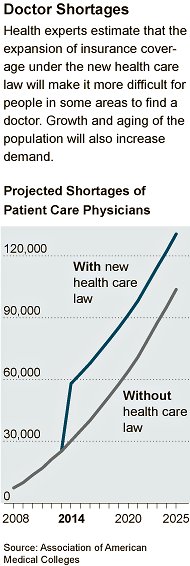
The lead article in the New York Times (right column, front page, by Annie Lowrey and Robert Pear) on Sunday, July 29, 2012, has the provocative headline “Doctor shortage likely to worsen with health law.” My first instinctive reaction was “What? I don’t know of any part of the new health law, the ACA, that will reduce the number of doctors!” Then, reading the first sub-head, I realized what they meant. “Primary care is scarce”, something I well know and have written a lot about, and then, in smaller type, “Expanded coverage, but a greater strain on a burdened system.”
What they are saying is that the shortage of physicians, especially primary care physicians, will effectively increase (get worse) as millions more people gain insurance coverage under ACA. This will happen both through expansion of Medicaid coverage or through health insurance exchanges that will permit both individuals and small companies that have not previously had or offered health insurance to buy it at much lower rates. The expansion of health insurance coverage to these groups is a good thing; it will eliminate a major barrier to quality health care, itself a component of good health. Unfortunately, phrasing the problem in the way that the NYT headline does is likely to inflame displeasure with the law among those who, through ignorance or selfishness or both, are happy to draw up the bridge behind themselves, not wishing to share their, often limited, access to doctors with the newly insured. Surely, this is not an acceptable reaction.

The problem is that there are too few doctors to provide each person with full access to care, especially in an aging population because, as noted in a quote from Dr. Darrell G. Kirch, president of the Association of American Medical Colleges (AAMC) “Older Americans require significantly more health care…Older individuals are more likely to have multiple chronic conditions, requiring more intensive, coordinated care.” It is, however, much more about the poor distribution of doctors by specialty (too few primary care physicians, too many of many varieties of subspecialists), by geography (too few in rural and poorer areas, too many in more affluent and suburban areas), and by the insurance status of the patients that they care for (too few who take Medicaid, and even Medicare, and too many willing to care for only those with insurance that reimburses more). And, relevant to the cost of care, too many whose business model is built upon doing high-cost, high-profit procedures even when they are marginally (or not at all) beneficial to the patient, rather than providing the comprehensive care needs of people.

Sadly, and for the wrong reasons, some of this may not come true, so some of the fears of the already-insured may be mitigated. Many states have indicated their plans to not participate in Medicaid expansion despite the financial incentives to do so (the federal government will pay 100% for the next several years, and 90% thereafter). These same states, as well as others, also pay so little under Medicaid that many doctors won’t see Medicaid patients. Unfortunately for that ignorant-or-selfish-or-both minority of seniors who say “keep the government’s hands off my Medicare!”, many of those same doctors are now refusing to accept Medicare patients. Hey, if they can make a big living without it, why should they take care of your mother? So if you are not on Medicaid OR Medicare maybe you’re safe – if you live in a relatively affluent part of an urban area, and have private insurance, and especially if you are in an integrated health system such as Kaiser that provides a strong primary care base.

The NYT article indicates that “Physician compensation is also an issue. The proportion of medical students choosing to enter primary care has declined in the past 15 years, as average earnings for primary care doctors and specialists, like orthopedic surgeons and radiologists, have diverged. A study by the Medical Group Management Association found that in 2010, primary care doctors made about $200,000 a year. Specialists often made twice as much.” In fact the gap is much greater than that between primary care physicians and specialists “like orthopedic surgeons and radiologists”; it can be several times greater. (This is because “specialists” includes, in addition, doctors like psychiatrists and some pediatric and medical subspecialists who earn much closer to what primary care doctors do, and thus bring down the “specialist” average.) A recent estimate was that an anesthesiologist can anticipate earning $7 million more in a career than a family physician!

I woke the other day to NPR to hear Republican senator Orrin Hatch saying “To be clear, it is a disgrace that so many American families go without health insurance coverage.” I was nearly ecstatic; to agree that something is a problem is the first step to getting together to solve it. And, surely, that something is “a disgrace” is even worse than being a problem. I turned up the radio to find out how Sen. Hatch and the Republicans were going to solve it. Unfortunately, that was not to be. It was a sound bite in a story by Julie Rovner titled “GOP Says Coverage For The Uninsured Is No Longer The Priority” (July 27, 2012). I hadn’t known it ever was a priority for the GOP, but this piece laid any doubts to rest. Worse than the double-talk from Hatch was Senate majority leader Mitch McConnell, in this excerpt:

McConnell: "Let me tell you what we're not going to do. We're not going to turn the American health care system into a Western European system. That is exactly what is at the heart of Obamacare. They want to have the federal government take over all of American health care."

By "Western European," McConnell means government-run or primarily government-run. Western European countries also pretty much don't have people who don't have health insurance. And by the way, there are closer to 50 million Americans without health insurance; 30 million is the number the health law is estimated likely to cover.

McConnell never says what the GOP is going to do, but you can be sure it will not have anything to do with covering everyone. This is too bad; there are possible solutions, and many of them are even based in the marketplace. Step one is for Medicare to completely revamp its reimbursement policies. This is because, to a large degree, Medicare reimbursement is the basis for all insurance reimbursement; while they may pay more (say, 1.5x Medicare) the ratios are the same, so if Medicare changes what it reimburses for primary care relative to subspecialty care, other insurers will follow.

In biological systems, the normal situation is to have “negative feedback loops.” For example, if the thyroid gland is producing enough thyroid hormone, it shuts down production in the pituitary gland of another hormone that stimulates the thyroid. When there is not enough thyroid hormone in the blood stream, the low levels stimulate the pituitary to become active, activating the thyroid gland. This is functional. Imagine how dysfunctional a “positive feedback loop” would be – the more the thyroid produced thyroid hormone, the more the pituitary would produce its stimulant, creating yet more thyroid hormone, and soon we’d all be hyper-thyroid and dead!

This is like the current medical reimbursement system. We pay doctors more to do procedures, pay them more to take care of only a few diagnoses in a limited organ system, pay them more if they live in an expensive area, and even more if they refuse to care for those on government insurance. This is a positive feedback loop where you economically do the best being a medical “partialist” in a nice suburban area taking care of relatively well-off people, and worst being a generalist in a rural area taking care of people who need it. Or, if you choose, work less than full time and still make a good living.

Medicare should immediately begin reimbursing primary care at a higher rate, including for the effort and cost of managing chronic disease, so that the income differential between generalists and specialists largely disappears. Then it should increase payments for doctors working in more rural and remote areas, not for “desirable” urban and suburban areas. Doctors practicing in urban underserved areas should get smaller incremental payments (after all, they can live in a “good” neighborhood and commute).

We will still have a shortage of doctors until the pipeline fills, but such a system will decrease the financial impetus to be yet another subspecialist in a metropolitan area that already has enough, and increase the impetus to become a generalist in an underserved area. If we are to depend on the market, this is the kind of market-based approach we need.

0 Multimorbity, primary care,social determinants, and universal insurance: where they all come together


Tinetti, Fried, and Boyd, writing in JAMA June 20, 2012, discuss “Designing health care for the most common chronic condition – multimorbidity.”[1] They note that adult patients with only a single chronic disease are the exception (e.g., only 17% of people with coronary disease have that as their only chronic condition) and the rate of multi-morbidity increases with aging. However, the medical system is organized around individual diseases, both in terms of reimbursement (based upon International Classification of Diseases, 9th Edition, or ICD-9, codes) and in terms of specialty structure. Thus, cardiologists care for heart disease (only), oncologists for cancer (only), endocrinologists for diabetes and thyroid disease, etc.

Moreover, they observe that even more recent efforts to reward quality have been single-disease focused, with metrics related to acute myocardial infarction (heart attack), pneumonia, and particular surgical procedures. This is added to the fact that these criteria focus on hospitalized patients, rather than on efforts to keep them well. They state that “To align with the clinical reality of multimorbidity, care should evolve from a disease orientation to a patient goal orientation, focused on maximizing the health goals of individual patients with unique sets of risks, conditions, and priorities.”  This is a long way of saying care should be patient-centered. They also say that “The process for assigning responsibility for providing clinical care also needs redesign, perhaps beginning with a systematic process for determining which clinician should have primary responsibility for helping patients make decisions,” which is a long way of saying people need generalists, or primary care physicians.

This group does not want to call them generalists, though. Perhaps this is because they are from Yale, a school well-known for its research and for its high-tech tertiary and quarternary care capability, but woefully weak in training physicians to provide general, or primary care. It doesn’t even have a Family Medicine department, despite the fact that this is the specialty that provides the largest number of primary care physicians, so these authors are from Internal Medicine. They have suggested that such physicians be called comprehensivists rather than generalists because the latter term “fails to capture the breadth of skills and expertise required”  to care for patients with multiple comorbidities.

While this article suggests nothing new (for example, I have addressed these issues several times, including Primary Care: What takes so much time? And how are we paying for it?, May 21, 2010 and Primary Care’s Image: A Problem?, November 17, 2009), it is good that it keeps these issues on the table. Providers, particularly hospitals, want to be paid for metrics that are easily identifiable and relatively easy to achieve. Students choosing careers often want to pick a field in which they can feel that they are masters of a limited field of knowledge.Patients sometimes want to get help for a specific problem from a particular specialist. But everyone is better served if there is coordination of care and decisions regarding the care of one condition take the others into consideration. This means that medications which have negative interactions or countervailing effects are less likely to be prescribed. It means that the difficult decision about whether or not to have a particular surgical procedure is taken in the context of all of the health issues confronting the person. It means that decisions about interventions in desperate situations or at end of life are made wisely, and in full possession of the available information, without bias toward treatment of a particular disease regardless of its impact on others.

In a recent “Doctor’s Blog” on the British Medical Journal’s (BMJ) “doc2doc” site [disclaimer: I also blog at this site] one doctor presented their thoughts on “Is prevention ALWAYS better than cure?”. I do not agree with all of Dr. Lush’s points, and am not sure I even understand them all, but that “…as we get older the risks of many diseases increases so that many patients end up on a cocktail of preventative drugs, probably 2 antihypertensives, aspirin, beta blocker, statins, anti-inflammatory medications, diuretic, asthma treatment, type 2 diabetic treatments, analgesics, etc etc.” is a fact. Many of these medications can be for either prevention or treatment or both (remember the concepts of secondary and tertiary prevention, so that treatment of one condition – say high blood pressure – can be prevention of another – say heart attack), but they often lead to patients saying “too much!” Worse than that, some may have opposing effects – the anti-inflammatory medication you take for your arthritis can lead to GI bleeding and kidney failure. The narcotics you take for your pain, in addition to the more well known negatives of addiction, cause constipation so serious it may well be the source of even worse symptoms.

Even the presence of a National Health Service is not sufficient. A study from Scotland published recently in the Lancet, “Epidemiology of multimorbidity and implications for health care, research, and medical education: a cross-sectional study”, demonstrates an extremely high rate of multi-morbidity in that county, with much higher rates in poorer communities. The “[O]nset of multimorbidity occurred 10–15 years earlier in people living in the most deprived areas compared with the most affluent”. The authors conclude that their findings “…challenge the single-disease framework by which most health care, medical research, and medical education is configured. A complementary strategy is needed, supporting generalist clinicians to provide personalised, comprehensive continuity of care, especially in socioeconomically deprived areas.”

Of course, unlike Britain, which has a National Health Service, the US does not cover everyone. A Kaiser Family Foundation (KFF) “health reform subsidy calculator”, cited by Don McCanne in his Quote of the Day, demonstrates the amazing out-of-pocket costs for health insurance that come with slight incremental increases in family income, and would be mitigated, although not eliminated, by the Affordable Care Act. This creates a real difference in our two health cultures, because many people in the US do not seek care because of the financial barriers, and then only for acute episodes.

In terms of having a supply of physicians who can fill the role of caring for multiple morbidities, Britain has much more extensive primary care base than the US. It is possible that their system has as great a risk as ours of generalists not being sufficiently “comprehensivist”; our system, with more hospitalists, is moving in the British direction of having primary care doctors who do not follow their patients into the hospital. But in the US, we are without a sufficient number or percent of primary care doctors altogether.

The reality is, as I have often observed before, is that a comprehensive national health insurance system is a necessary, if not sufficient, component of a plan to actually ensure health. Two other major components are also necessary. The first is addressing the social determinants of health, which are largely associated with class/socioeconomic status, and the second is having an adequate primary care base, And, while, as the Scottish study indicates, the national health service in Britain does not guarantee either, it does provide a vehicle for addressing the second and mitigates the impact of the first.

The absence of such a system in the US makes the problems of an inadequate primary care workforce and the impact of socioeconomic disparities much worse.


[1] Tinetti ME, Fried TR, Boyd CM, “Designing health care for the most common chronic condition – multimorbidity”, JAMA 20Jun2012;307(23):2493-4.

0 Retail clinics: power to the patient


If you’re a primary care doctor, as I am, you hear a lot of complaining about retail clinics, often denigrated as “doc in a box”, although most are staffed by Nurse Practitioners or Physician’s Assistants. Most commonly located in pharmacies (well, the hypertrophied pharmacies of national chains such as CVS and Walgreen’s), they have also appeared in other large retail stores such as Wal-Mart where thousands of people go every day expecting to get all that they need in one location. If you can get everything from food to big-screen TVs, car parts to drugs, why not health care?

The reason primary care doctors are concerned is that it more directly competes with what they do than what sub-specialists do. No one is (yet) worried that these clinics will do colonoscopy, not to mention cardiac catheterization or orthopedic surgery. Plus, the main “legitimate” argument against them from primary care physicians is the lack of continuity in this setting, and sub-specialists are not overly concerned with this issue. They do believe in continuity for the problem being treated if it is for a defined time (e.g., pre, during, post surgery) or longer-term for the problem that they care for (heart disease, cancer). But people are not using retail clinics for these things; they may go for blood pressure and glucose and cholesterol checks and refills of prescriptions for these conditions, but they are not expecting such clinics to manage complex disease. Hopefully.

In a recent “Viewpoint” in JAMA, Christine Cassel, an internist, geriatrician and ethicist who is at the American Board of Internal Medicine, writes about this topic in “Retail clinics and drugstore medicine”.[1] It is a generally positive review, noting how well such clinics meet the needs of busy people for fast, convenient and generally effective care. She notes that these clinics, in general, “…have a limited scope of services defined by widely accepted treatment guidelines for acute illnesses,” that “Many have extended hours and are open on weekends, have embraced electronic medical records, and refer patients to a primary care physician if they do not have one,” and that “Research done by third parties has suggested that clinics provide equal-quality care and lower costs than other settings. Reported patient satisfaction is high.” It seems to me that these are all good things; that we should be applauding such access to care. If we rue the transfer of income from ourselves and our institutions to the mega-corporations who run these clinics and hire the staff, it is understandable, but not in itself something we can expect others to be overly concerned with.

Dr. Cassel observes how these clinics help other health professionals, including pharmacists, work at the top of their license and skill set. She notes that while there still are problems with retail clinics, especially their integration with the rest of the health care system, they are making progress. Their corporate owners want them to be integrated, to be sure that they can continue to make money taking cash or insurance for diagnosis and treatment of straightforward problems that can be cared for in such settings, and can refer out for other problems.

The fact is that “integration”, or even communication, within the traditional health care system is much more the exception than the rule. We see patients who have been to the Emergency Department at another hospital who show us the “rest and see your doctor next week” paper that they were handed, with no information (lab, x-ray, even diagnosis) to help that doctor. We see patients who are seen in Mental Health Clinics from which we get no communication about diagnosis or why they are on the medications that they are taking (or even if the patient’s understanding about what medications they are taking is the same as the mental health provider’s). We see patients cared for by other doctors in our own institution who have yet to “go live” on the Electronic Medical Record (EMR) and we have no idea what was done. Indeed, the corporations running retail clinics in their stores appear to be much more willing to invest money in ensuring communication than are most of our medical institutions.

Rather than bemoaning such retail clinics and sitting around in the Doctors’ Lounge complaining about their deficiencies, we should be both welcoming them as partners who can help to meet the acute care needs of people who don’t have (or can’t get in to see) their primary care doctors, and figuring out ways to effectively communicate with them and share information. We should also be figuring out how we can adapt our own practices to incorporate some of their most desirable features. These include:

·       Quick access: what you need when you need it. It is much better to be seen for a minor problem for a relatively small amount of money in such a clinic than in an Emergency Room.
·      Clear pricing: virtually absent in every medical practice other than those sometimes called “cash only” or more negatively “boutique” or “concierge”. Remember that this doesn’t mean that we can only care for those with cash in their pockets; folks can send their bills to insurance companies (although those who are less able, due to illness, age, language, or other issues will need help)
·      Patient centeredness: our practices are almost always doctor-and-staff centered. If we ask ourselves about every aspect of our process and practice “how can this be made simpler, easier and faster for the patient” we will come up with answers. We should never accept “oh, that will be inconvenient for the doctor” as a reason to not change something, but rather figure out how to make it more feasible.

Training practices, with students and residents will have a harder time. The former need more time to learn what they are doing, and should only be observers in such settings. The latter, while they often have the skills (and employ them in “moonlighting” situations) are governed by many rules from their accrediting body that will often “trump” patient-centeredness.

But we need to do this. There are too few primary care doctors to meet everyone’s needs, we need teams, and we need everyone –including the doctors – to be operating at the “top of their license”. We cannot see retail clinics are not the enemy. Rather, we should see them as mirrors, providing us with a reflection of our own deficiencies, and information about how we can not only work together but improve our practices overall.


[1] Cassel CK, “Retail clinics and drugstore medicine”, JAMA, May 23/30, 2012—Vol 307, No. 20, pp. 2151-2.

0 Specialty Hospitalists: what is best for the patient?


In a “Viewpoint” article in JAMA, April 25, 2012, John Nelson, Laurence Wellikson, and Robert Wachter discuss “Specialty hospitalists: analyzing an emerging phenomenon”.[1]They describe the progression of the hospitalist model – doctors who just care for patients in the hospital, rather than seeing them also in the office from general medical care to specialty care. They note that in recent years hospitals have hired physicians in a variety of specialties, including neurology, orthopedics, obstetrics/gynecology and others, to take care of patients, particularly at night or in emergency situations, so that other doctors to not have to come in to do so.

An argument in favor of this arrangement is that these physicians are present for urgent events (e.g., the neurology stroke specialist who is there right away to care for a person who comes to the emergency room with an acute stroke) and that they may have specialized knowledge that a more “general specialist” doesn’t. In a useful “box”, the authors summarize the criteria that might be applied to deciding if a specialty hospitalist is a good idea. These include the number of inpatients who might require their services, the urgency of the need for those services (is it a matter of minutes that may save a life?), whether the other specialists are so tied up in the operating room or office that they could not respond promptly, and if there so much “sub-specialization” that many doctors in that specialty would not be capable of addressing the needs that arise in the hospital.

I have previously written about “generalist” hospitalists, (Hospitalists, Dec 4, 2008) and expressed my concerns about this movement from the point of view of the patient. The advantage for hospitals and health systems that employ physicians is obvious – they can have some doctors that work in the ambulatory setting, and some that work in the hospital, and each can be most “productive” in that setting and not have to leave to go to the other, decreasing efficiency.  In theory, at least, the hospitalists are very good at managing the problems of people in the hospital, so quality may improve. And, to be sure, doctors often like it also – it makes their lives easier, or more controllable – they are only responsible for outpatient medicine, and don’t have to travel to the hospital to see their patients, or if they are hospitalists, don’t have to go to the office. While not one of those listed by Nelson et al. as a benefit of having hospitalists, this advantage for doctors is real.They can work set shifts, like many of the most popular specialties such as emergency medicine and anesthesiology and intensive care – and then be off.  

This, of course, leaves the patients. While hospitalized patients certainly want to be cared for by a physician or physicians who are skilled in addressing the problems that they have, it is also often a very scary time, and a good time to have the involvement of someone who knows you, who knew what you were like before you got so ill that you had to be hospitalized. Your primary care doctor, if you are lucky enough to have one. The technical skills of the hospitalist may be fine, but they do not know what you were like before, and will not be involved in your care after, your hospitalization. Plus the same attractions that lead to hospitalists in the first place now have led to a sub-species of hospitalist called “nocturnists”, and mean that you will not necessarily even have the same hospitalist making decisions about your care, even during the day, for the duration of your stay.

In addition, the skill sets of hospitalists vary. Dr. Wachter is one of the founders of the hospitalist movement and heads a long-standing hospitalist service at the University of California San Francisco (UCSF). His 1996 article, The emerging role of "hospitalists" in the American health care system,[2]written with Lee Goldman, is one of the seminal articles in the field. But the results that are achieved by teams of experienced career hospitalist groups such as his, in terms of both quality and cost, may well not be replicated by hospitalists who are just out of their residency training and spending a year working in this role prior to subspecialty fellowships in cardiology or gastroenterology. Nelson, et al., cite a study by Seiler et al. showing that patient satisfaction with hospitalist care is equal to that provided by primary care doctors,[3]but this doesn’t separate out the satisfaction of patients who have primary care doctors who are now not seeing them from those who do not.

That said, I do not have a problem with most specialty hospitalists. Specialists are not generalists, unlike primary care providers, we don’t think that every person should have one of each. The person who comes in to the Emergency Department with an acute stroke and benefits from having a stroke neurologist right there is not likely to have a general neurologist. The same can be said for orthopedics and otorhinolaryngology (ENT) and neurosurgery, among others, or for people who need emergency intervention for an acute heart attack. The case of “laborists” is somewhat different; the women having a baby (arguably the most common reason for people being glad to be in the hospital) who has been followed by an obstetrician or family doctor might well want and expect to be delivered by that doctor (a point acknowledged by Nelson). While many primary care doctors would like to provide this continuity to their patients, they may be unable to in the system they work in. And if it is not their “fault”, it is a pretty guilt-free way to enjoy the benefit.

If the hospitals and health systems make more money and operate more “efficiently” with separate hospitalist and “ambulists” (yes, this term is being used by some!), and if the doctors are happy with the arrangement because it makes their lives more controllable, the boat on generalist hospitalists and “laborists” has probably already sailed, at least in communities large enough for this to be feasible.

Anyone who has flown in and out of the Kansas City International Airport (KCI) knows what a pleasure it is compared to other airports in even relatively big cities. Built on only one level in 3 almost-circular terminals, there are only a few gates for each security checkpoint so the lines are relatively short (compared to, say, the nightmare at Denver International). Once you come in you get off your plane, walk right out into the hall where your baggage carousel is nearby, and then you walk right out to the street (even sooner if you have no checked bag), where you can be picked up or go to your car in the garage right there. It is a true pleasure for the traveler.

But it is not so desirable for the airport and airlines. I have heard that this setup requires more security people than any airport except Heathrow. There are rumblings about redesigning, maybe rebuilding, the airport to make it more “efficient”. Sure, it will be worse for the traveler, but that’s the way it goes.

So maybe you want to ask your doctor if s/he will see you in the hospital. And let the hospital and health system know that you think it is important, too. It is unreasonable to ask your primary care doctor to work a full day in the office and also care for patients in the hospital; that time needs to be built into their schedules by their employers. It could work; you never know. What’s good for people sometimes actually happens.

And if you haven’t flown in and out of KCI, you should do it soon before it becomes Denver. 


[1] Nelson JR, Wellikson L, Wachter RM. Specialty hospitalists: analyzing an emerging phenomenon. JAMA. 2012 Apr 25;307(16):1699-700.
[2] Wachter RM, Goldman L., The emerging role of "hospitalists" in the American health care system, N Engl J Med. 1996 Aug 15;335(7):514-7.
[3] Seiler A, Visintainer P, Brzostek R, et al. Patient satisfaction with hospital care provided by hospitalists and primary care physicians. J Hosp Med. 2012;7(2):131–136, pmid:22042532.
 

Education of Health Copyright © 2012